





Governance adapts to the AI interaction
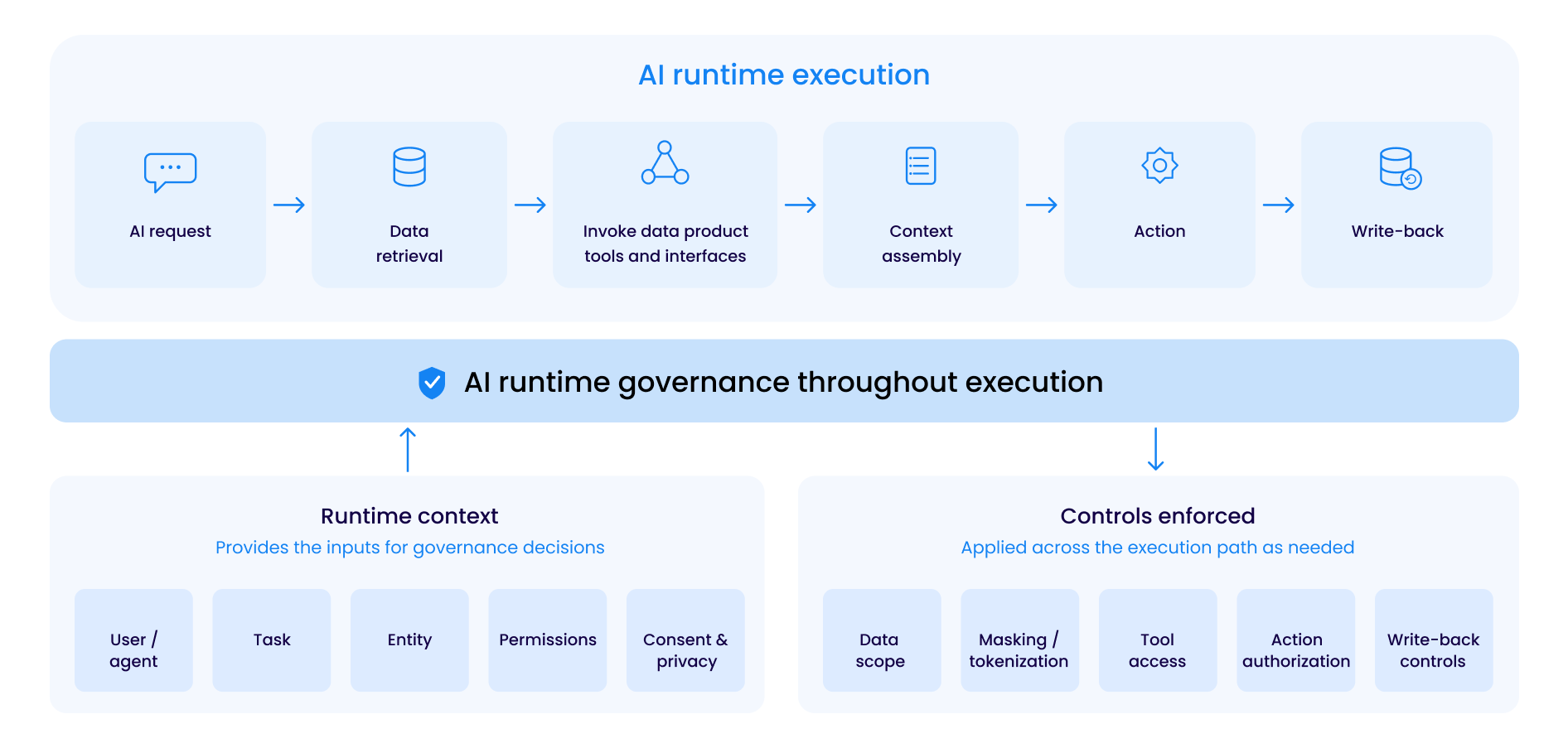
Agentic data governance must operate at runtime when AI systems retrieve
live enterprise data and take actions on it.

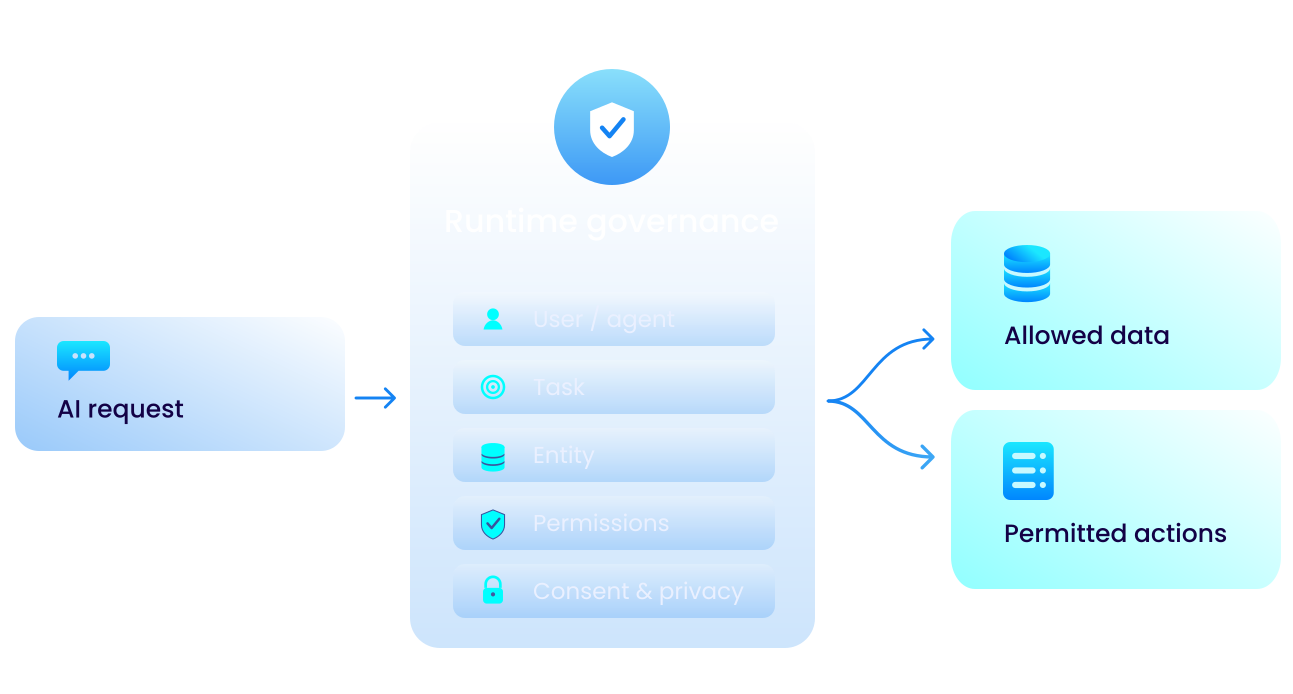
Understand the request
Identify the user or AI agent, the business entity in scope, the task, and the intended action.

Determine what is permitted
Evaluate permissions, enterprise policy, consent, privacy, and task boundaries for the request.

Enforce throughout execution
Apply controls across data access, masking, tool use, actions, and write-back as the interaction runs.

Data access
-
Scope data to the relevant entity and task
-
Restrict records and fields
-
Mask sensitive values dynamically
-
Tokenize sensitive data before it reaches the LLM
- Enforce consent and privacy requirements

Actions
-
Control which tools and operations may run
-
Authorize actions by task, user or agent
-
Govern transactional write-back
-
Require approval or block actions when needed
- Record every action and authorization decision for audit

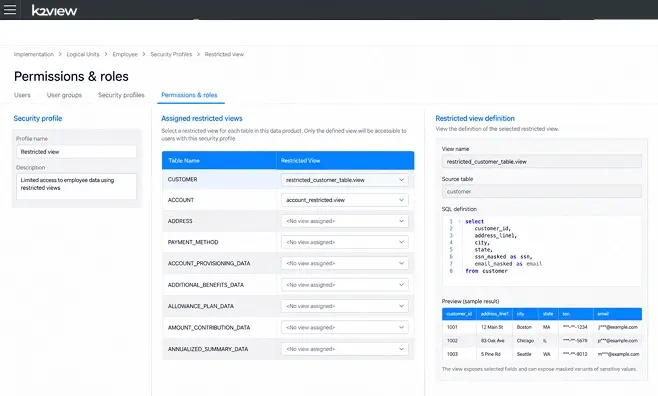

Security profiles restrict table views, while authorized APIs govern write-back
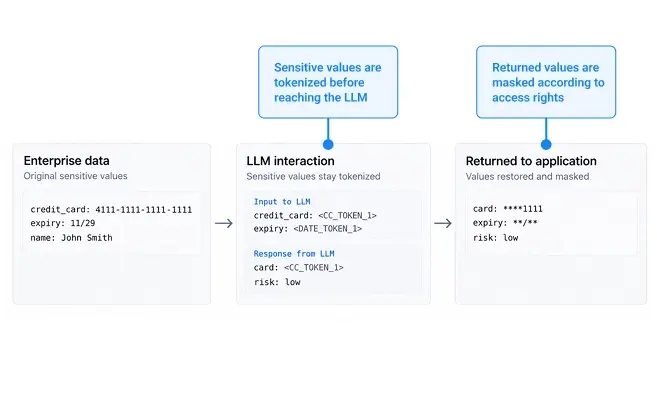
Sensitive values are tokenized before the LLM, then restored and masked by access rights
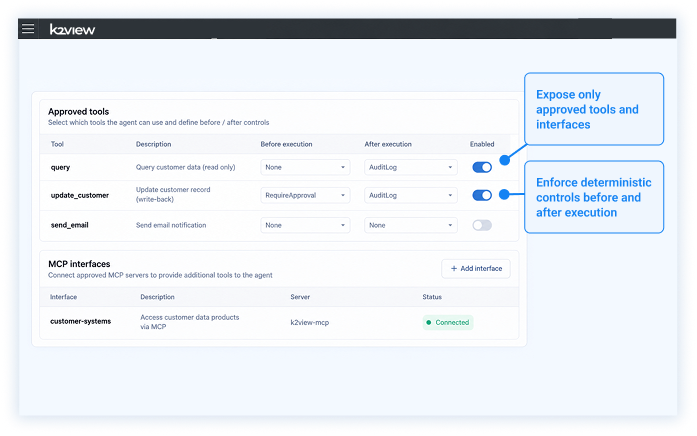
Approved tools and interfaces are exposed, with runtime controls applied
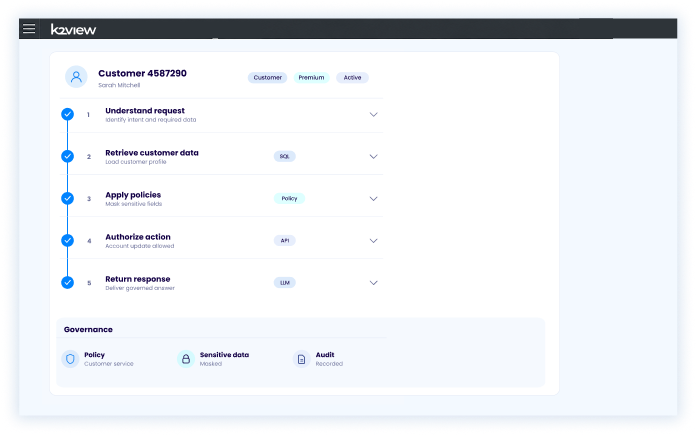
Each interaction records policies, actions, and outcomes for audit and lineage

AI Context Delivery
Deliver the precise business context and actions each AI request needs through data agents that orchestrate enterprise data operations at runtime.
- Interpret intent and identify the relevant business entity
- Orchestrate data-product tools, SQL, APIs, MCP, and RAG
- Deliver business-fresh context at conversational speed
- Execute authorized actions and transactional write-back

AI Evaluation & Observability
Evaluate AI outcomes against the operational context used, with visibility into the data, tools, actions, and runtime behavior behind every interaction.
- Score outcomes across configurable evaluation dimensions
- Trace context, tools, actions, and model responses
- Replay production interactions for evaluation and regression
- Monitor quality, latency, tokens, and cost


