





Why does AI behavior change in production?
Because LLMs are non-deterministic, and the conditions they rely on can change after deployment.
K2view AI Evaluation & Observability Platform captures the point-in-time operational context and execution behind each interaction, so teams can investigate failures with the exact conditions that produced them.
Evaluate before deployment.
Improve with production evidence.

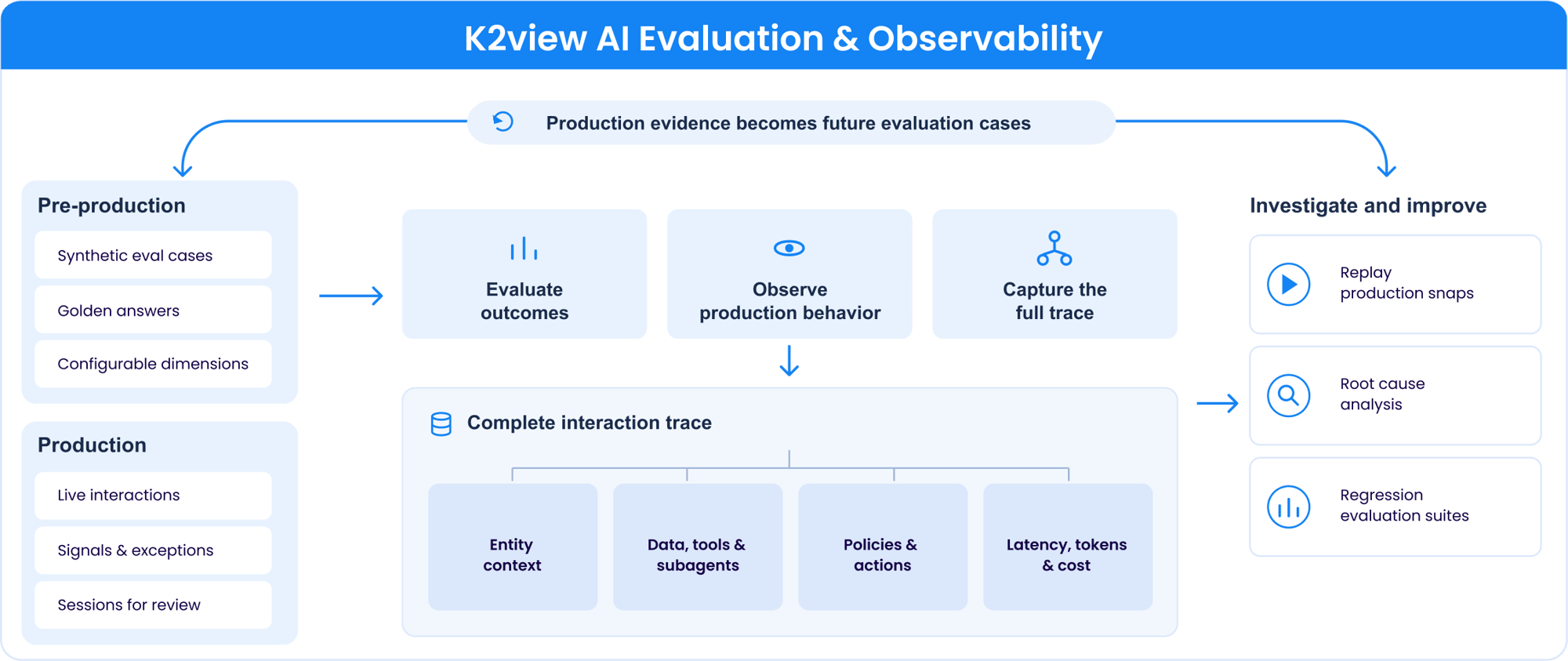
Evaluate AI behavior before deployment
Generate synthetic cases, including multi-turn interactions, and run them against golden answers to identify regressions. Score outcomes across configurable dimensions to assess behavior beyond regression checks.
Evaluate and observe production behavior
Apply configurable evaluation dimensions to live interactions and surface low scores or anomalous behavior. Monitor production signals with context, tools, subagents, latency, tokens, and cost.
Investigate failures and prevent regressions
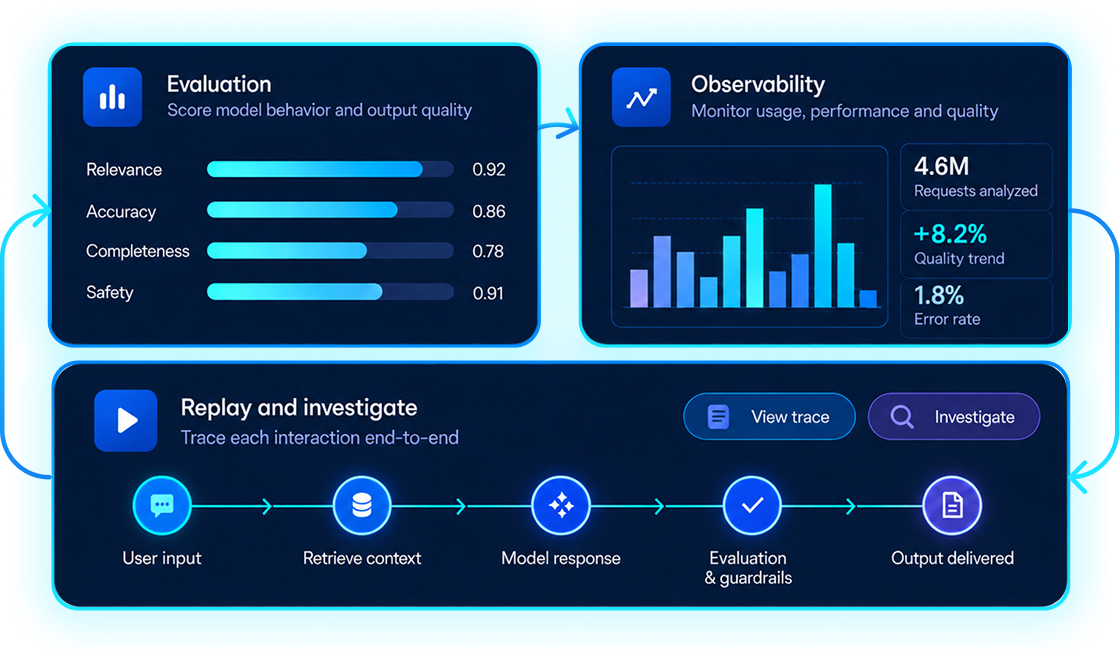
Package production interactions with their original context and configuration, replay them in a lower environment for root cause analysis, and add them to regression evaluation suites.
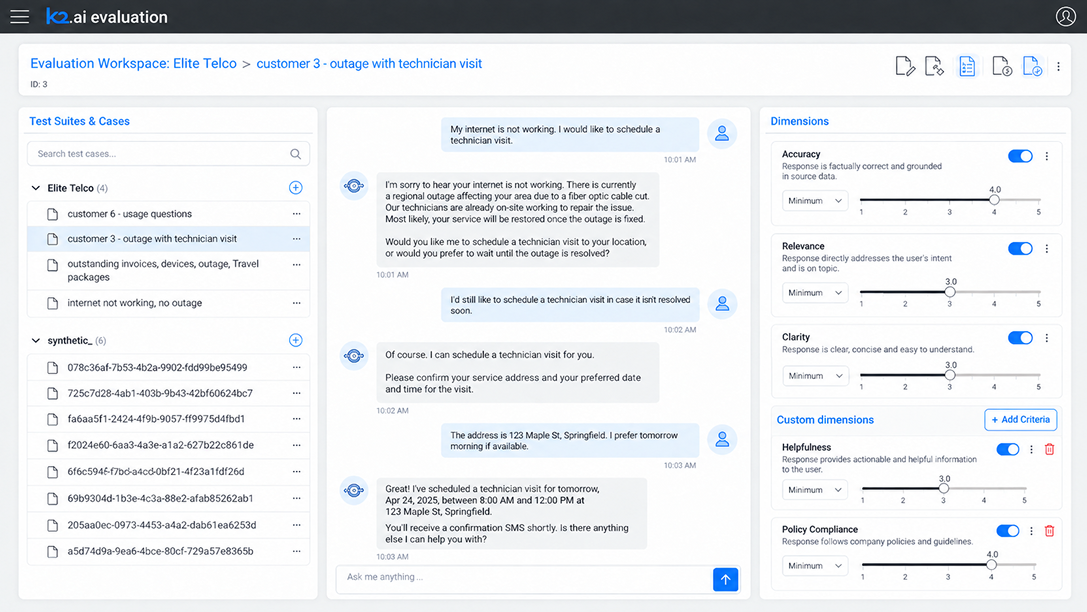

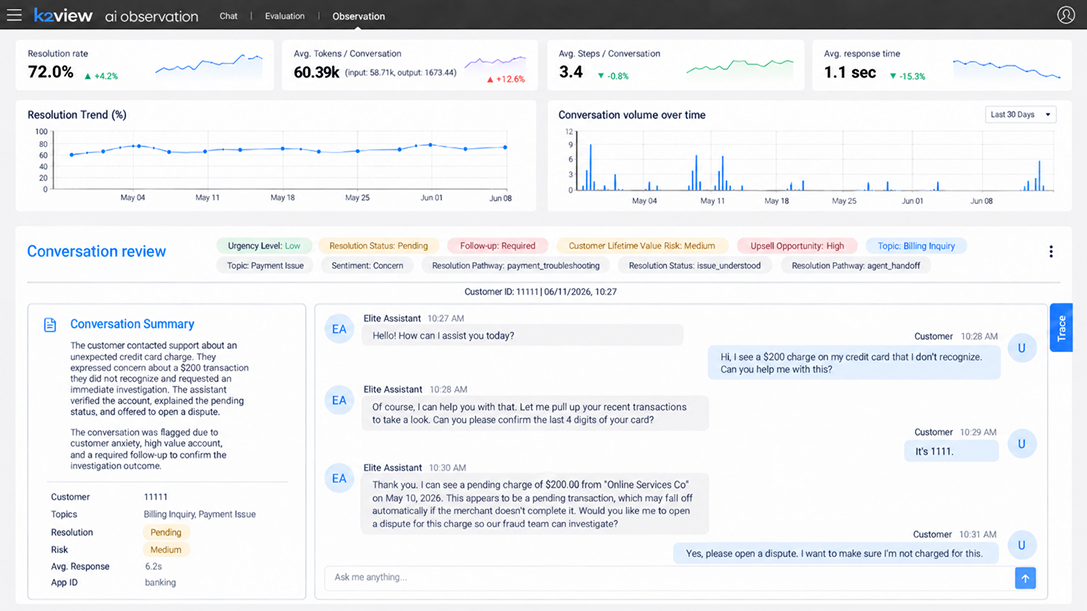
Monitor production signals and drill into the interactions behind them.
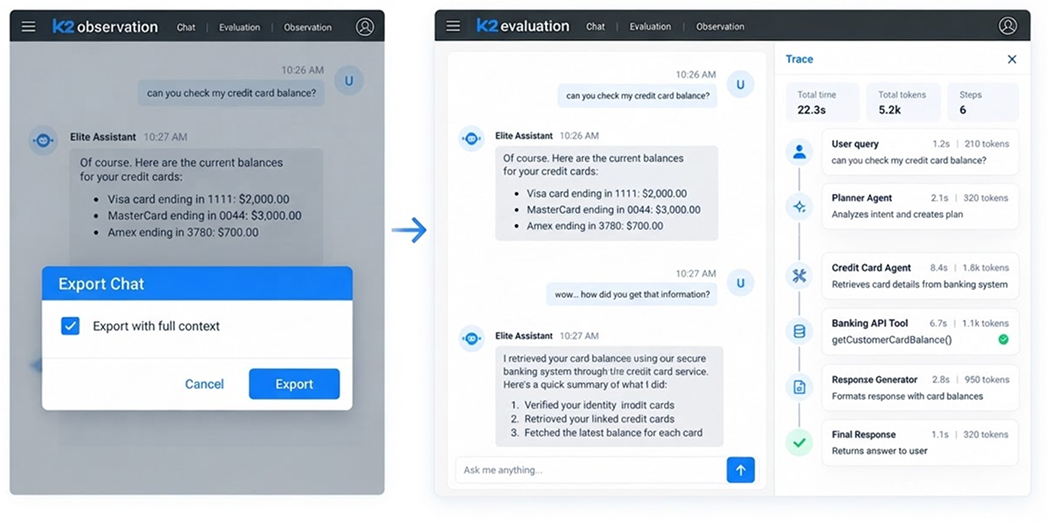
Replay production interactions with their original context preserved.
AI Context Delivery
Use data agents to orchestrate the precise context and actions each AI interaction requires.
- Interpret intent and resolve the relevant business entities
- Invoke data-product tools, MCP, APIs, SQL, and RAG
- Assemble structured and unstructured context in milliseconds
- Execute authorized actions and write-back

AI Runtime Governance
Dynamically control the data and actions permitted for each interaction based on its runtime context.
- Evaluate permissions, entity scope, and task scope in flight
- Apply masking, tokenization, privacy, and consent controls
- Control which tools and actions can be invoked
- Govern authorized updates and write-back


