



Business context starts with the business entity
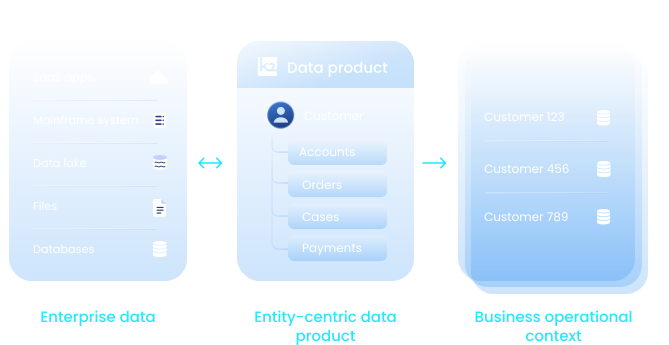
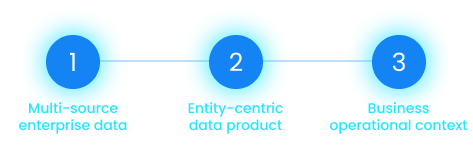
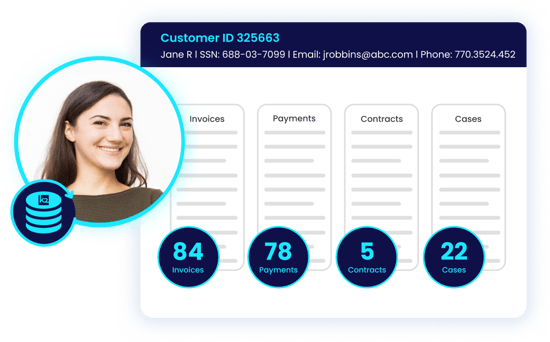
K2view turns fragmented enterprise data into AI-ready data products organized around business entities such as customers, accounts, orders, and claims.
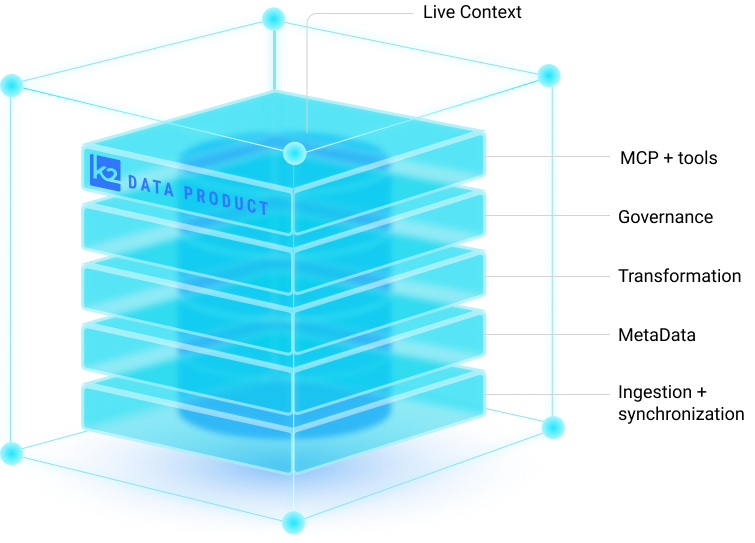
These reusable data products form the foundation of the K2view AI Context Platform, keeping business context current and supporting governed read and write-back.

AI-assisted discovery profiles enterprise data, classifies sensitive fields, identifies relationships, and enriches metadata with AI-generated descriptions, all managed in the data catalog.
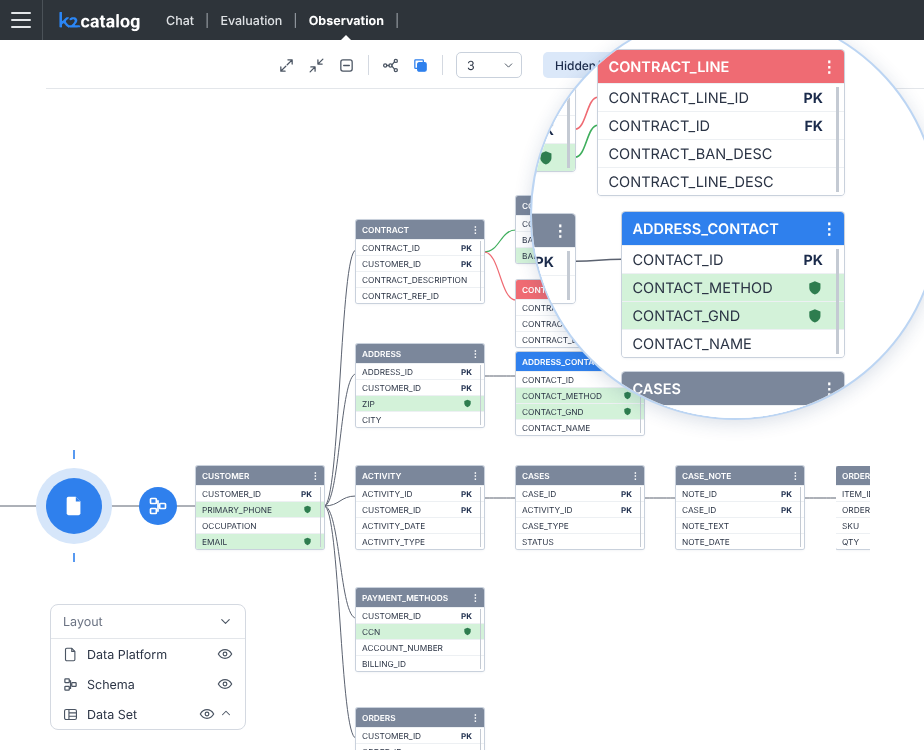
AI-assisted entity-centric semantic modeling connects related data across systems and enriches it with business meaning and classifications.
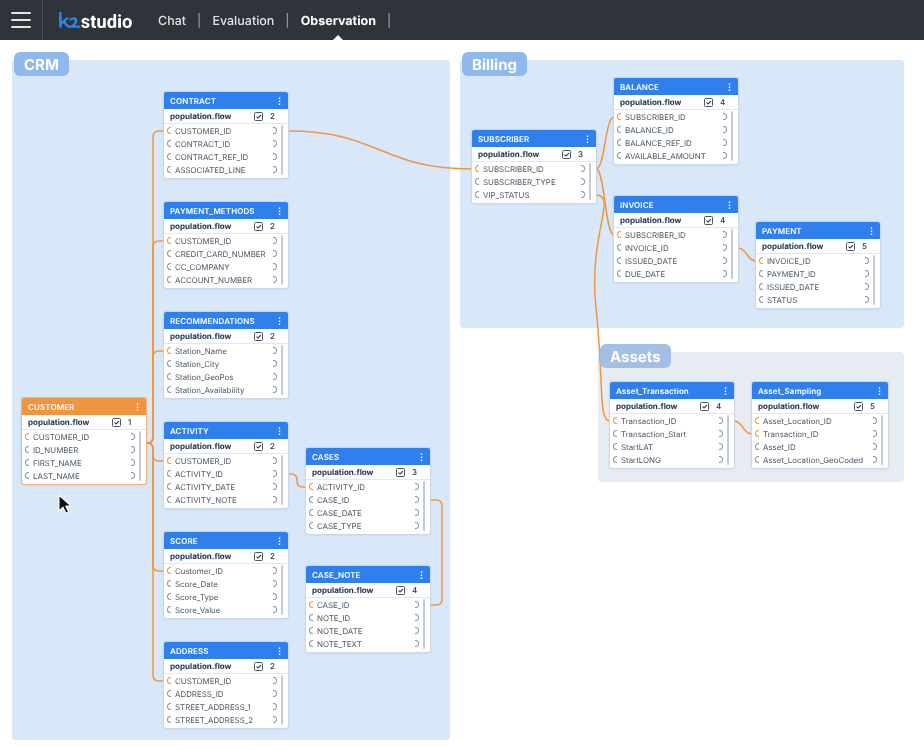
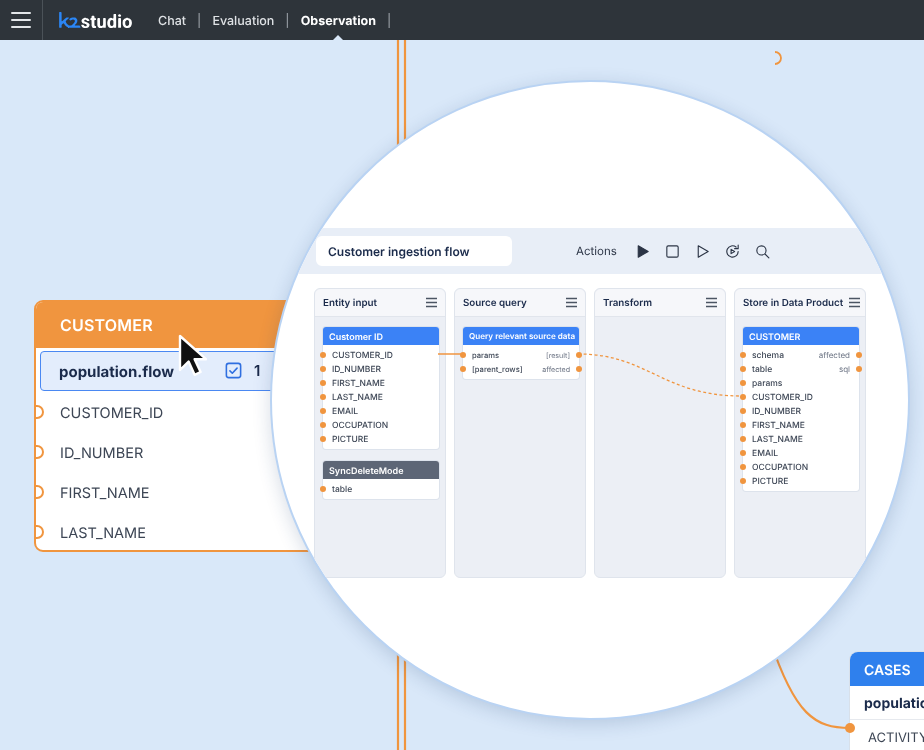
The entity model defines how each table is populated for every entity instance.
Auto-generated ingestion flows query the required source data and can validate, enrich, mask, or transform it before it becomes part of the entity’s business context.
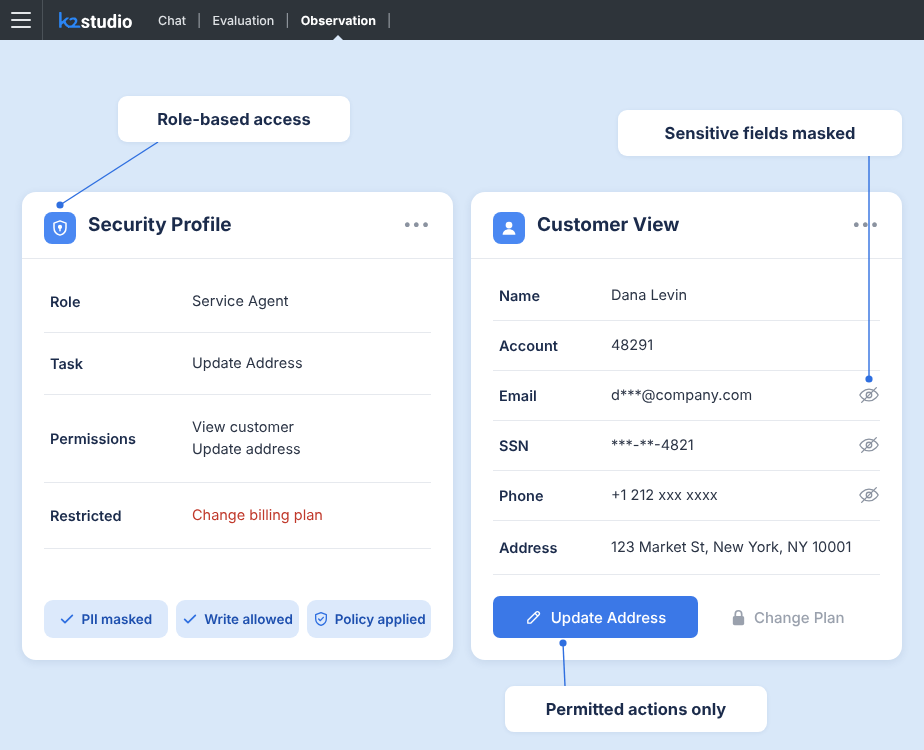
Access to data and permitted actions are determined dynamically for each interaction, based on the user, task, permissions, and privacy requirements.
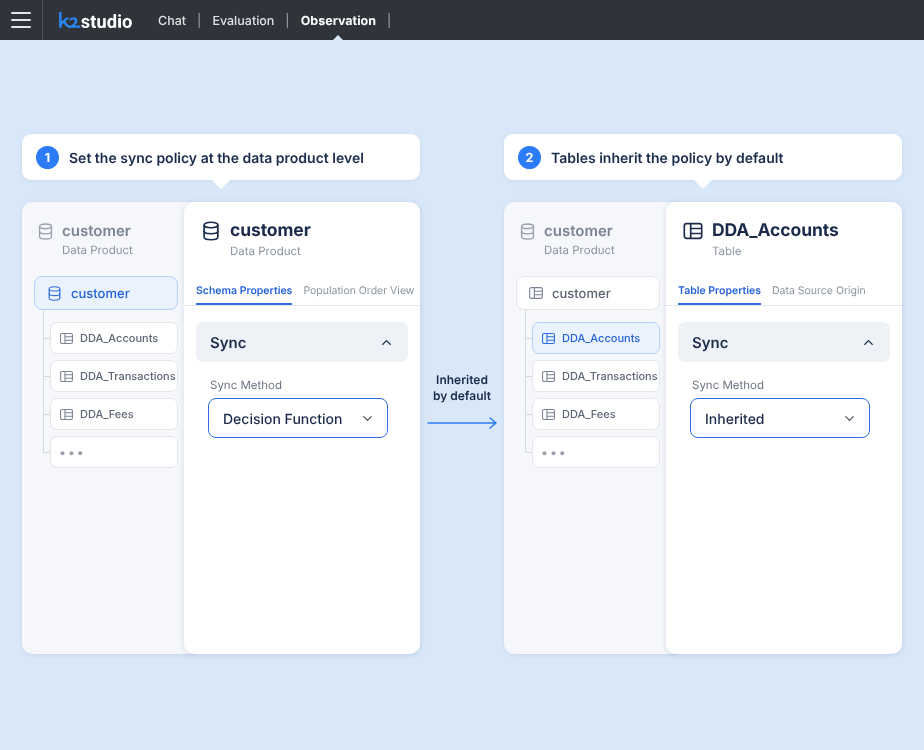
Entity data is synchronized bi-directionally with source systems according to freshness policies defined for each use case, keeping business context current for AI.


Pelephone powers GenAI customer service with trusted customer context
"For a GenAI-powered chatbot to be smart and effective, a GenAI-ready data infrastructure is required. That’s where K2view enters the picture."


"For a GenAI-powered chatbot to be smart and effective, a GenAI-ready data infrastructure is required. That’s where K2view enters the picture."

Cellcom transforms customer service
with AI-ready customer data
"K2view allows us to combine GenAI and AI-ready customer data to transform customer service, and deliver real business value faster than ever."

"K2view allows us to combine GenAI and AI-ready customer data to transform customer service, and deliver real business value faster than ever."

"K2view has a unique approach of integrating enterprise data with the LLM's advantage"


Complete by entity
Each entity’s context unifies relevant data, relationships, and business semantics across enterprise sources.

Trusted
Entity context is built from validated, cleansed, and resolved data, with quality policies enforced during ingestion.

Read/write access
Entity context is available in milliseconds via APIs and MCP, with RAG retrieval and governed write-back to source systems.

Governed
Entity context and actions are governed dynamically per interaction based on user, task, permissions, and policy.

Business-fresh
Entity context is synchronized with source systems according to each use case’s freshness requirements.