
SYNTHETIC DATA GENERATION TOOLS
Synthetic data tools: Compare top platforms and features
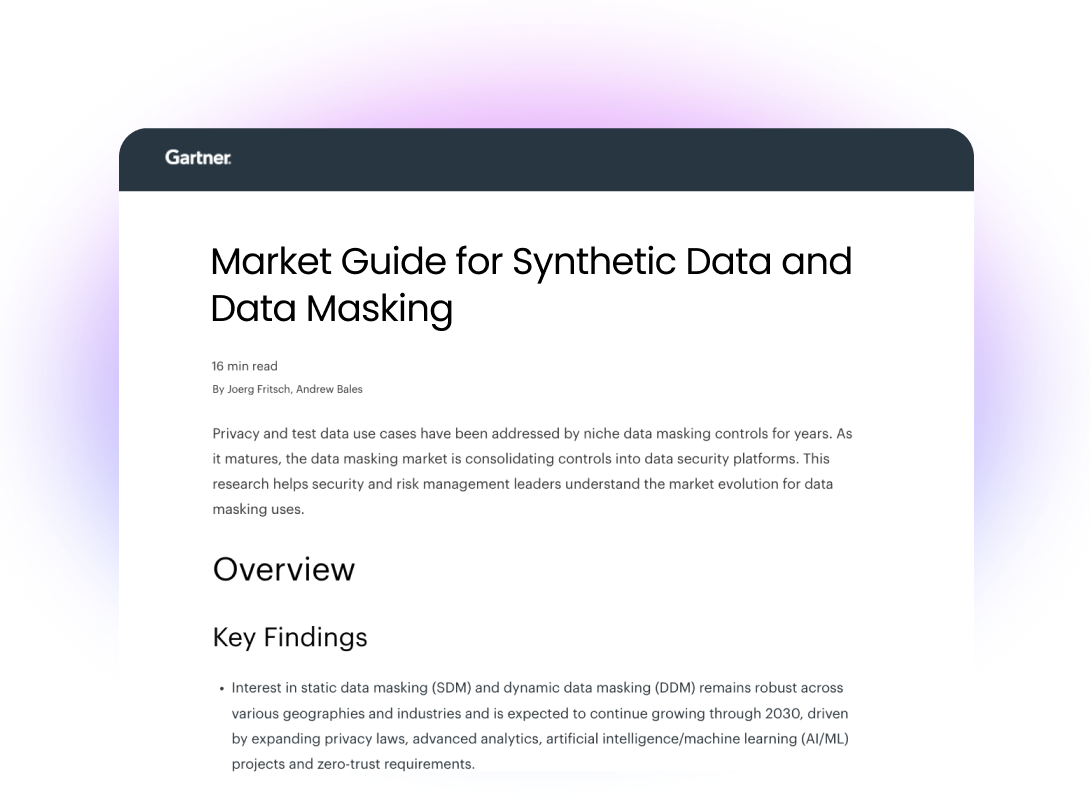
Backed by Gartner’s Market Guide for Data Masking and Synthetic Data
How teams evaluate synthetic data tools
Modern synthetic data tools go beyond basic data generation—combining privacy-preserving techniques, AI-driven generation, and platform capabilities to support testing, analytics, and AI use cases.
Compare synthetic data tools based on:
-
Synthetic data generation methods and approaches
-
Privacy-preserving and compliance techniques
-
Data realism, accuracy, and statistical integrity
-
Scalability for testing, analytics, and AI workloads
-
Vendor capabilities and platform fit
Get the Gartner report
Key capabilities to compare in synthetic data tools
Compare synthetic data generation techniques
Evaluate different approaches to generating synthetic data across use cases
Evaluate privacy-preserving capabilities
Understand how tools protect sensitive data and ensure compliance
Balance data realism and utility
Maintain accuracy and usability for testing, analytics, and AI
Evaluate synthetic data tools and vendors
Compare platforms, capabilities, and vendor fit
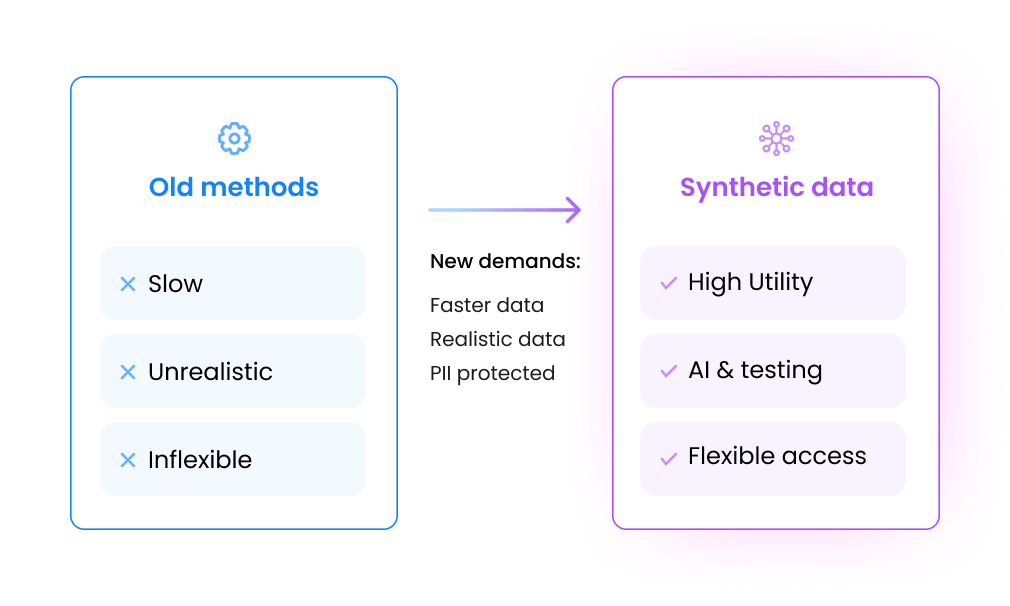
Why teams are re-evaluating synthetic data tools
Modern synthetic data tools must go beyond basic generation. Teams now evaluate platforms based on privacy-preserving techniques, data realism, scalability, and support for testing and AI use cases.
- Testing and development deliver production-like synthetic data on demand
- Analytics and AI maintain high-fidelity data for model training and analytics
- Privacy & compliance Enforce privacy-by-design across environments
As a result, teams now compare multiple synthetic data tools and approaches before selecting a platform.
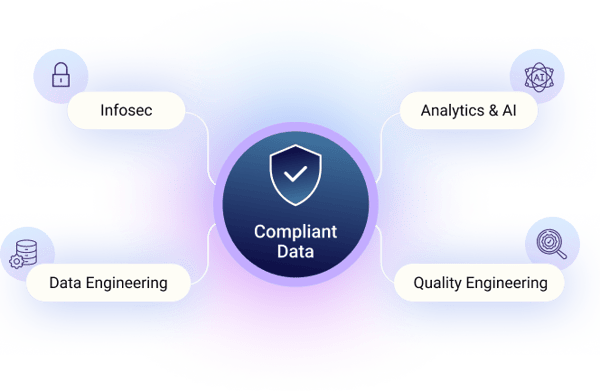
Who This Guide Is For
- Infosec: Privacy & compliance evaluation
- Data engineering: Scalable synthetic data delivery
- Analytics & AI: High-fidelity training data
- Quality engineering: Realistic test data at scale