
Compare Leading Data Privacy Methods
Compare data masking, anonymization, tokenization, and synthetic data with Gartner’s Market Guide.
Data masking isn’t enough for testing, analytics, and AI. Maintaining data utility, consistency, and referential integrity is challenging, so teams compare data privacy techniques.
Compare data privacy methods based on:
-
Data masking vs anonymization, tokenization, and redaction
-
Data utility vs privacy protection
-
Synthetic data and its tradeoffs
- Alternatives to data masking
Get the Gartner report
Compare data privacy techniques
Data masking vs anonymization
Compare masking, anonymization, tokenization, and synthetic data across real-world use cases.
Masking limitations and consistency
See where masking impacts data utility, consistency, and referential integrity across systems.
Data masking vs tokenization
Evaluate how these methods affect realism, usability, and compliance for testing and AI.
Privacy approaches and vendors
Explore tools, techniques, and providers to identify the right data privacy strategy.
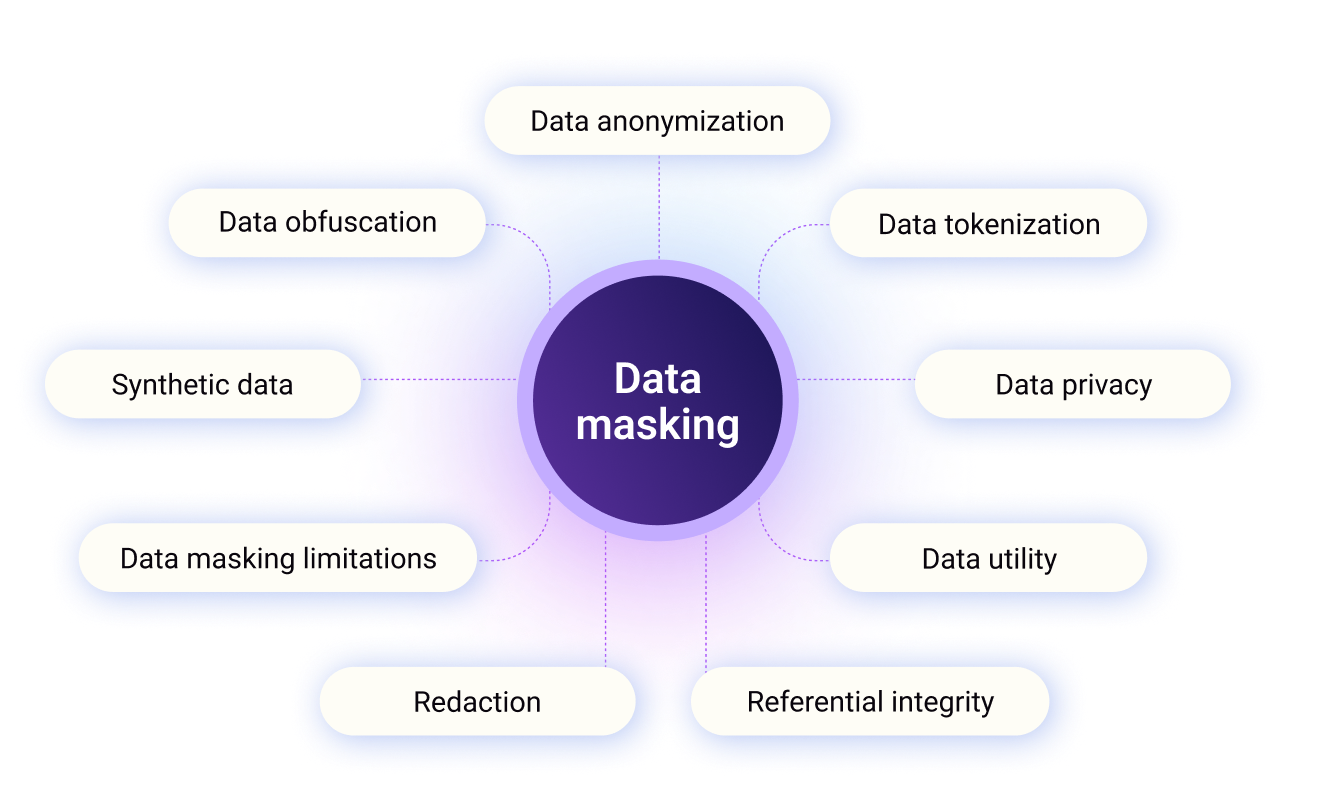
Where data masking fits,
and where it falls short
Data masking is an effective way to protect sensitive data, but maintaining data utility, consistency, and referential integrity across systems can be challenging.
As a result, teams evaluate when masking is sufficient and when alternative approaches, like anonymization and data tokenization, are needed.
- Testing and development: Need realistic and compliant test data
- Analytics and AI: Need high-utility data
- Consistency and referential integrity: Need consistent, relational data
Who this guide is for
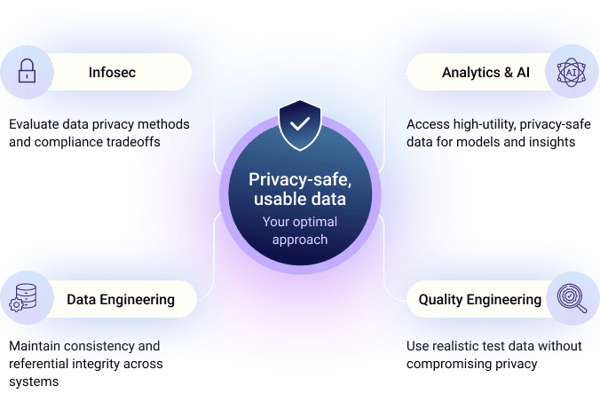
- Infosec: Compare modern privacy and compliance methods
- Data engineering: Solve complex referential integrity issues
- Analytics & AI: Access high-fidelity, privacy-safe data
- Quality engineering: Leverage production-like data for testing
Compare data masking vs. alternatives with Gartner’s guide
Evaluate methods for consistent data masking, anonymization, tokenization, and synthetic data using Gartner’s framework—so you can choose the right approach for your use case.